
Finnish culture and everyday life
Moving to Finland means getting to know a new culture, everyday customs and society. On this page, you’ll find information about the Finnish way of life, family life, celebrations and traditions, as well as how people in Finland participate in society and make decisions together. By familiarising yourself with Finnish customs and values, it will be easier to understand everyday life, build relationships and find your place in society.
This text has been automatically translated from Finnish using AI and has not been manually reviewed.
Daily life, customs and lifestyle in Finland
In Finland, everyday life is guided by trust, equality and respect for others. Finns value honesty, their own peace and quiet, and harmonious community life. People are generally valued on the basis of their actions, skills and work, rather than their status or wealth. This is also evident in the workplace, where hierarchies are often flat and employees’ views are taken into account.
Nature, home, leisure and shared rules are an important part of the Finnish way of life. On this page, you’ll find information about the common customs, practices and cultural characteristics that are evident in everyday Finnish life.
Culture and customs
Finnish culture combines modern society with tradition, creating a unique foundation for a way of life that values both individual freedoms and the common good.
Education and working life
In Finland, education and work are taken seriously, and significant investment is made in them at both the individual and societal levels. In working life, the emphasis is on conscientiousness, responsibility and a balance between work and leisure, which supports holistic wellbeing.
Home and everyday routines
In Finland, people show consideration for their neighbours by following the rules of the housing association, avoiding disruptive noise – particularly during quiet hours – and keeping communal areas tidy for the comfort of all users.
Environmental responsibility is reflected in everyday life through the careful sorting of waste, returning empty bottles for a deposit, and a shared commitment to conserving natural resources and reducing the amount of waste through recycling.
One of the important rules of Finnish culture is that shoes are not worn indoors. When you arrive at someone’s home, you do not take your shoes inside with you, but leave them in the hall. This is partly due to Finland’s climatic conditions, as outdoor shoes may be dirty or wet, especially in winter.
Peace and privacy in everyday life
In everyday life, Finns value peace and quiet and their privacy. This is particularly evident on public transport and in public spaces, such as buses, trains and libraries. On a train or bus, it is rare to strike up a conversation with other passengers, and people generally prefer to travel in peace, minding their own business. Silence is seen as a natural part of social interaction. Silence is not seen as negative; rather, it signifies comfort and acceptance.
Nature, cottage life and leisure
A close connection with nature is an integral part of the Finnish way of life, and nature plays an important role in both leisure activities and maintaining mental wellbeing. In the summer, many Finns head to their summer cottages to relax. Summer cottages are often situated by the water or in the countryside. Cottage life is a popular way to relax and get away from the hustle and bustle of everyday life. Everyone’s rights allow everyone to move about and enjoy nature, even on land owned by others, provided they do not cause harm to nature or other people.
The sauna and Finnish customs
Going to the sauna is a natural part of many Finns’ lives. The sauna is a sacred place for Finns, and almost every home has its own sauna. The word ‘sauna’ is the Finnish word that has spread most widely to other languages, and going to the sauna is a major part of Finland’s national identity. Many houses have a sauna, and in blocks of flats you can often book your own sauna session. The sauna is a place to wash and relax. Please remember the following when using the sauna: book your sauna session in advance, wash before entering the sauna, use a bath towel when sitting on the benches, be considerate of other sauna-goers and leave the sauna tidy when you leave.
Family, relationships and life stages
Family, friends and other close people play an important part in people’s well-being in Finland. Although Finns may seem reserved at first, they value trusting relationships and respect for others. Families in Finland are supported in many ways, and everyone has the right to receive help in various life situations. On this page, you will find information about family, relationships and the different stages of life, as well as the related rights, services and support available in Finland.
Family and close relationships
A sense of community is important to Finns, but it often manifests itself in a more subtle way than in many other cultures. Although Finns may seem reserved when meeting someone for the first time, they are loyal and trustworthy friends. Family and close personal relationships play a central role, and the family is supported both through legislation and everyday practices.
Common-law relationship, marriage and divorce
A common-law relationship means that two people live together as a couple without being married, and starting the relationship, living together and separating are their private affairs. Under Finnish law, marriage is a relationship between two people as defined by law. Marriage is entered into by a wedding ceremony. Before the ceremony, an application must be made to have any impediments to marriage examined. This examination ensures that there are no impediments to marriage under the Finnish Marriage Act. Such impediments include being a minor, being already married, or being too closely related. Without this examination, it is not possible to enter into marriage. The examination is carried out by the Digital and Population Data Services Agency.
Either both spouses or just one of them may apply for a divorce. The application for divorce can be submitted in person or sent by post or email to the district court in either spouse’s place of residence. The registry of the Kymenlaakso District Court is located in Kouvola. There is no need to state the grounds for the divorce. A reflection period begins once the application for divorce has been filed.
When a child is born into a family in Finland
When a child is born into a family in Finland, the child is registered in the Population Information System at the hospital, and the parents must notify the Digital and Population Data Services Agency of the child’s name and native language. The child’s nationality is determined on the basis of their parents’ nationality.
Financial support for families with children
When a child is born and as they grow up, parents are entitled to family leave and various benefits paid by Kela. The Kela office provides guidance and advice on all matters relating to Kela benefits. The office’s address in Kotka is Keskuskatu 7.
Help with family problems
If you are experiencing problems within your family or need support, you can get help and advice in complete confidence. On this page, you will find information on where to get help in Finland.
The death of a loved one in Finland
The death of a loved one brings not only grief but also many practical matters to deal with. On this page, you’ll find information on what happens in Finland following a death, how funerals and inheritance matters are handled, and where you can find support and help whilst you’re grieving.
Society, values and advocacy in Finland
Finland is a democratic society that emphasises equality, fairness and the opportunity to participate in public affairs. Everyone can influence decisions that affect themselves and their community, for example by voting, getting involved in voluntary organisations or providing feedback to the authorities.
Below you will find information on Finnish values, decision-making, elections and opportunities to have a say, as well as on freedom of religion and the religious communities operating in Finland.
Finnish values
Finland is known as a society characterised by equality, fairness and trust. People are valued on the basis of their actions, skills and sense of responsibility. In the workplace and in society as a whole, emphasis is placed on equality, flat hierarchies and the opportunity to participate in decision-making.
Local decision-making
The council exercises the municipality’s decision-making powers. The council sets out the long-term objectives for the municipality’s operations and finances in the municipal strategy it draws up. Councillors and deputy councillors are elected to the council every four years in local elections. Residents can participate in and influence municipal affairs by voting in these local elections. Residents also have the opportunity to submit proposals, respond to surveys, take part in discussions and provide feedback to officials.
Elections and voting
In Finland, citizens elect representatives to local councils, welfare regions, the Parliament, the Presidency and the European Parliament. The right to vote is generally granted to Finnish citizens aged 18 and over, but many foreign nationals are also eligible to vote in local elections, regional elections and European Parliament elections.
Influence and participation
Find out more about how you can get involved and make a difference in Kotka.
Religion and freedom of religion in Finland
In Finland, everyone is free to practise their own religion or to practise no religion at all. Freedom of religion is a right enjoyed by everyone, including immigrants. The largest religious communities in Finland are the Evangelical Lutheran Church and the Orthodox Church. However, Finland is largely a secular country where religion plays a minor role in everyday life.
There are communities of various faiths operating in the Kotka region. Information about them is available, for example, from libraries, multicultural centres and immigrant services. Finland offers a safe environment where different religions and beliefs are treated equally and respected.
Festivals and traditions
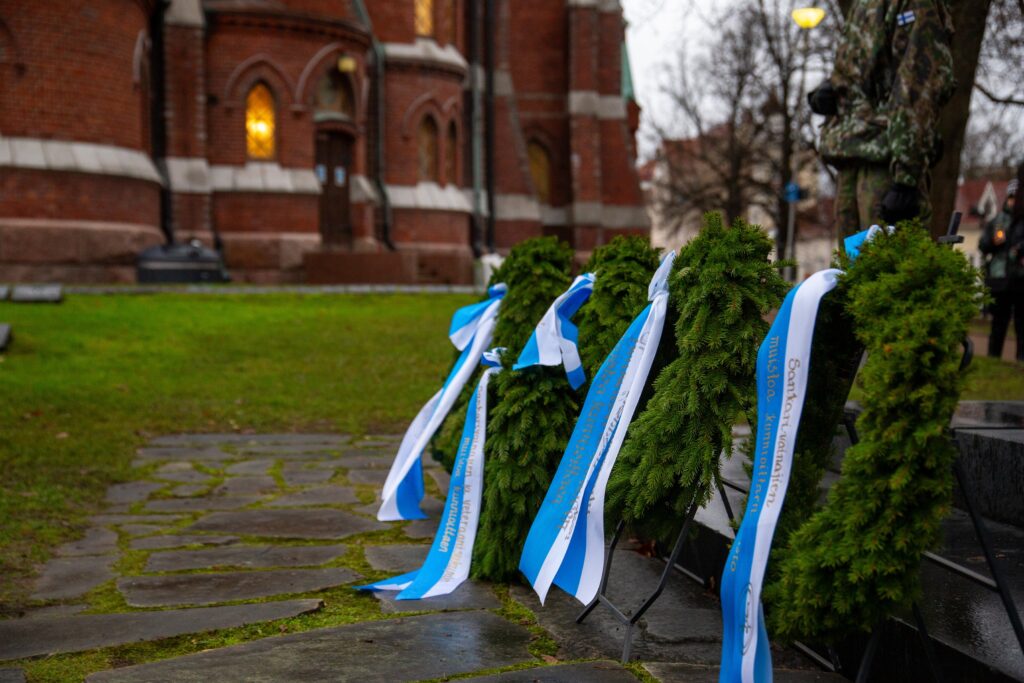
Finnish celebrations include official and religious public holidays, such as Christmas, Midsummer, Easter and Independence Day, as well as traditional celebrations such as May Day and Shrove Tuesday, which are often celebrated together with family and friends.
Mother’s Day and Father’s Day are also among the most important celebrations. In addition, Finns celebrate, amongst other things, school-leaving parties, birthdays and weddings.
Some official and religious public holidays are public holidays. On these days, many shops and government offices are also closed.